

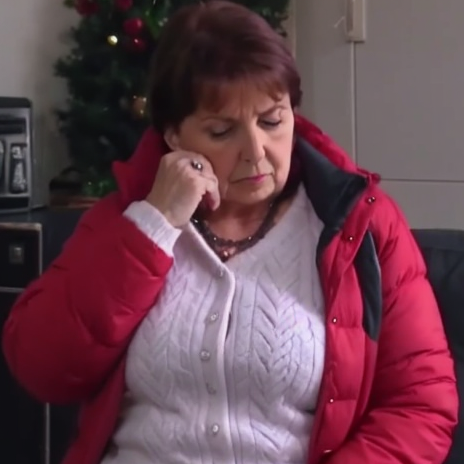
The story of Kateryna Ryndych from Kharkiv, a survivor of the bombing of Pivnichna Saltivka
AUTHOR:
On 23 February, 65-year-old Kateryna Ryndych from Kharkiv was happily strolling through Gorky Park wholly unsuspecting of what was about to happen. That evening, she retired for the night only to wake the next morning to the sound of explosions and incessant phone calls.
“I had no idea there could be a war and I began to panic, not knowing where to go or whom to call. My daughter rang, said she was heading for the bomb shelter and invited me to join her. But I decided to stay at home,” Kateryna recalls.
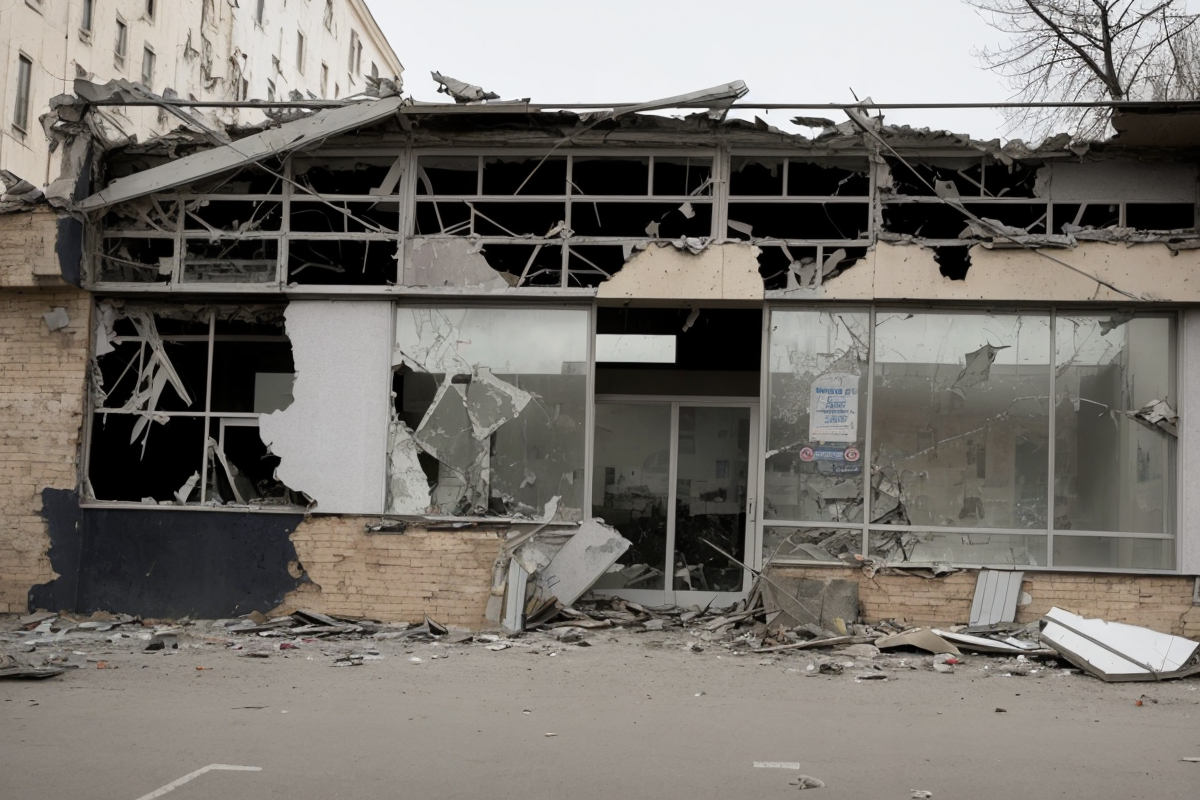
In the first days of the invasion, the Russians bombed Pivnichna Saltivka heavily. Kateryna was an elderly resident of Saltivka. One night, she heard something flying and a whistling noise. When she went outside the next morning, she saw windows on the ground and a store that had been destroyed by an explosion. Something was burning on Blücher Street, and the whole area was shrouded in smoke.
Kateryna escaped the shelling by hiding in the basement of her building. From time to time, she would run out to buy something for her children who had sought refuge in the bomb shelter, but there was nothing much left in the shops apart from some canned goods and gingerbread. There was gunfire and shelling every day and constant burning.
“A shell fell in our district, in front of the school on Garibaldi Street, where my grandson studied. Thank God, it exploded on the road first and then hit the school building. A shell also exploded behind my house, killing five people, including a pregnant woman,” Kateryna explained.
The apartments of Kateryna’s daughters were also hit by shells and her grandchildren were petrified and panicking. Therefore, on 5 March, Katryna, her children and grandchildren all left Kharkiv.
“We were at the station for a very long time, because so many people were trying to leave. The weather was terrible: our bags were standing in snow and the children, wrapped in blankets, were sitting on them. We must have sat like that on the platform for some five hours. Aircraft were flying overhead and we had no idea if they were theirs or ours. It was frightening,” Kateryna recalls. The family now lives in Lviv.
Kateryna Ryndych had previously had no problem living side by side with Russians; she had been born near Ukraine’s border with Russia and Russian children had studied at her school.
“But what they have done to our country is simply unbearable,” she says. “Take your children away, they are dying here too! Ours are dying and so are yours! And all this because of your idiot Putin. Don’t you feel sorry for your children and grandchildren? You’re killing children, innocent people! You think kindergartens, schools, shopping centres and parks are legitimate military targets? The ecopark was bombed and the animals killed! Stop your beast!”
This material was created based on testimonies collected by the Kharkiv Human Rights Group as part of the T4P (Tribunal for Putin) global initiative.
These pictures are created by artificial intelligence. They are NOT real. They are illustrations of the stories we tell. Most of these stories could not have been fixed by the camera. At the same time, there is documentary work by hundreds of Ukrainian and international photographers who produce real, and so much painful, documentation of this war. Check photographs by Oleksandr Glyadelov, Maksym Dondiuk, Mstyslav Chernov and Yevhen Malolietka, Andriy Dubchak, Yulia Kochetova, and many others.