

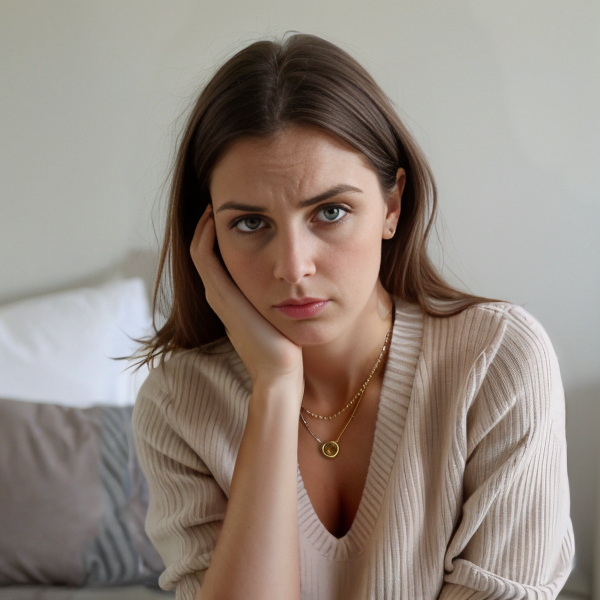
The story of Olena Pashynina, who was evacuated from Kharkiv with two small children
AUTHOR:
In March 2022, 29-year-old Olena Pashynina was forced to leave Kharkiv with her two daughters: 5-year-old Lera and 4-month-old Sonia. Olena’s husband Vladyslav serves in the Armed Forces of Ukraine.
Before the full-scale Russian invasion, the family lived happily: they had purchased and furnished a new house and had taken holidays. The eldest daughter went to kindergarten and attended various hobby groups. The Pashynins also had a dog, which, unfortunately, Olena had to leave with good people in Poltava, as it would have been very difficult for a woman to go abroad with two children and a dog.
In the evening of 23 February, Olena and her husband talked about the situation unfolding in the country. Given that Vladyslav serves under contract in the Ukrainian Armed Forces, he told Olena that the following day she would take their child to kindergarten alone, because he would be switching to barracks mode.
Olena resented this, because it was not easy taking her eldest daughter to kindergarten together with the baby and required a lot effort. At that time, Olena did not believe that the Russians would actually invade.
Olena tried to convince her husband that the Russian president’s threats were nonsense, that Ukraine was panicking, that nothing like that would happen and that, in the 21st century, everything can be solved with words. Vladyslav told her he hoped she was right but asked her to pack a suitcase all the same.
On the morning of 24 February, Olena and her husband woke to the sound of explosions and a phone call. Vladyslav’s father called and told them that Saltivka was being bombed. Olena ran to wake up her eldest daughter and began to gather their things.
Vladyslav then received a call from work to go on duty. Olena remained at home alone with the children and, to ensure they wouldn’t be afraid, Olena’s mother-in-law and her sister came over too.
At first, the family didn’t go down to the basement; despite hearing rounds of Grad fire, they remained where they were. However, on the third day of the full-scale war, they heard the sound of aircraft and things became much more frightening. It was then that Olena and her relatives decided to hide in the basement, even though it was very cold and uncomfortable.
“On the sixth day of the war, I realised that remaining at home was extremely dangerous and that my children and I might not wake up the next day. My husband stopped by the house for a moment because volunteers with the Territorial Defense unit were delivering nappies to everyone in need, and that included us. We were in the kitchen and I heard the wild cry, ‘Get down!!!’ That's how we learned what a Sushka is,” Olena explains.
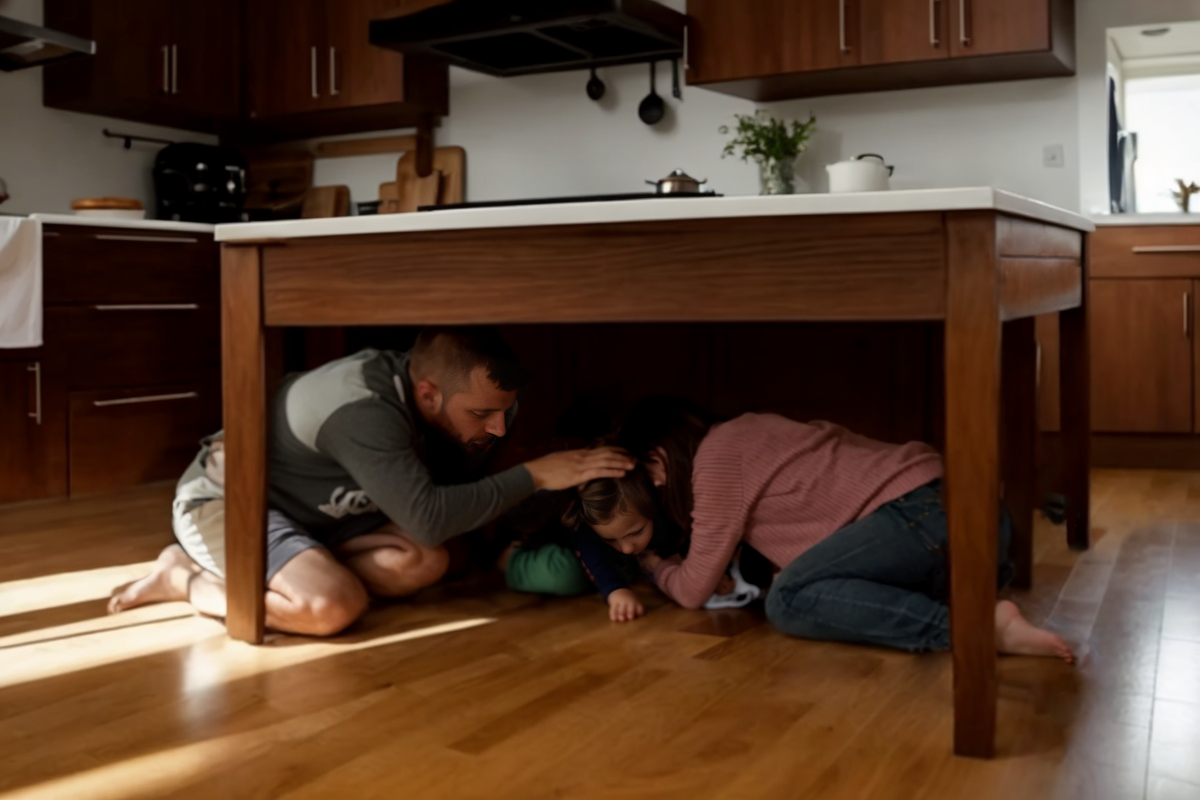
A Sushka is a jet fighter, and this one flew directly over Olena’s house. Out of fear, the family ran and hid under the table. “It was such a hellish roar, such a crazy sound, that we hugged each other to point where we bruised each other’s arms. Then we got out and my husband explained what it was. We understood that the war would not be the same as before, that it had now acquired a different colour,” Olena said.
The next time Olena and her children were sheltering in the basement during heavy shelling, crying and shaking from the noise of the aircraft, she realised that she had to leave Kharkiv. Her mother-in-law did not support her idea at the time, believing that driving through the city under artillery fire would be suicide. Back then, there were ever-growing instances of people dying simpky by trying to save themselves.
“I never considered myself a strong person, but I realised at that moment that I had a goal. I left the basement and started to seek acquaintances who could help. Fortunately, I have a very large social circle and there were many people who helped me get from Ukraine to Germany,” Olena explains.
Olena and her daughters first travelled to Poltava, where they stayed with an acquaintance she had studied with at university. Dmytro, a volunteer who had helped Olena’s husband in the Territorial Defense unit, had helped with their evacuation. As she left Kharkiv, Olena witnessed the scale of the destruction and she felt overwhelmed with feelings of hatred and hopelessness. Instead of the usual two hours, the journey to Poltava took the family 15.
In Poltava, Olena decided that, for the sake of her children’s safety, she should go abroad. Together with other families, they travelled four days to reach the Hungarian border. From there, Olena and her daughters reached Munich, where her friend Olha was already waiting for them.
Olena spent two days in Munich, at Olha’s house, and eventually settled in the city of Bad Tölz as guests of a German family of dentists, who run their own clinic.
Olena is sincerely grateful to the volunteers and kind people who helped her on her long journey abroad and who have provided her with everything she needs in Germany. She now attends sessions with a psychologist and dreams of returning to her native Kharkiv. Olena’s husband Vladyslav was wounded in the war and is currently undergoing treatment.
This material was created based testimonies collected by the Kharkiv Human Rights Protection Group.
***These pictures are created by artificial intelligence. They are NOT real. They are illustrations of the stories we tell. Most of these stories could not have been fixed by the camera.
At the same time, there is documentary work by hundreds of Ukrainian and international photographers who produce real, and so much painful, documentation of this war. Check photographs by Oleksandr Glyadelov, Maksym Dondiuk, Mstyslav Chernov and Yevhen Malolietka, Andriy Dubchak, Yulia Kochetova, and many others.***
These pictures are created by artificial intelligence. They are NOT real. They are illustrations of the stories we tell. Most of these stories could not have been fixed by the camera. At the same time, there is documentary work by hundreds of Ukrainian and international photographers who produce real, and so much painful, documentation of this war. Check photographs by Oleksandr Glyadelov, Maksym Dondiuk, Mstyslav Chernov and Yevhen Malolietka, Andriy Dubchak, Yulia Kochetova, and many others.