

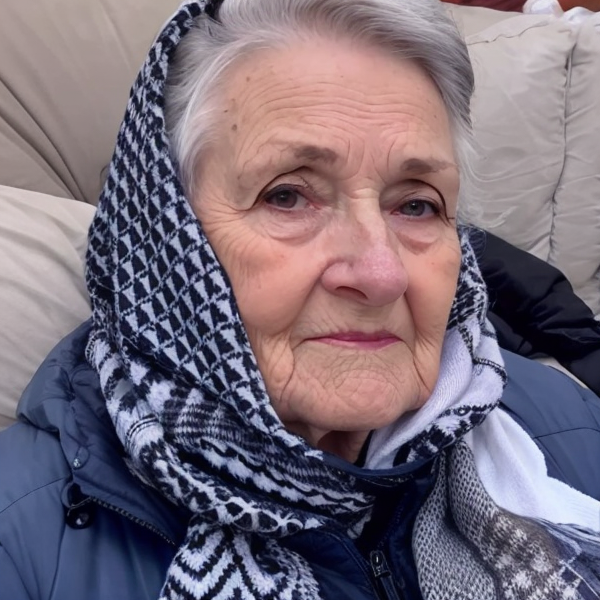
The story of Vira Tyata, who survived the terrible shelling in Mariupol and managed to leave the city
AUTHOR:
Vira Tyata worked as a teacher in a kindergarten in Mariupol her whole life. After the full-scale Russian invasion on February 24, 2022, she was forced to flee the city. She later learned that her house had been destroyed.
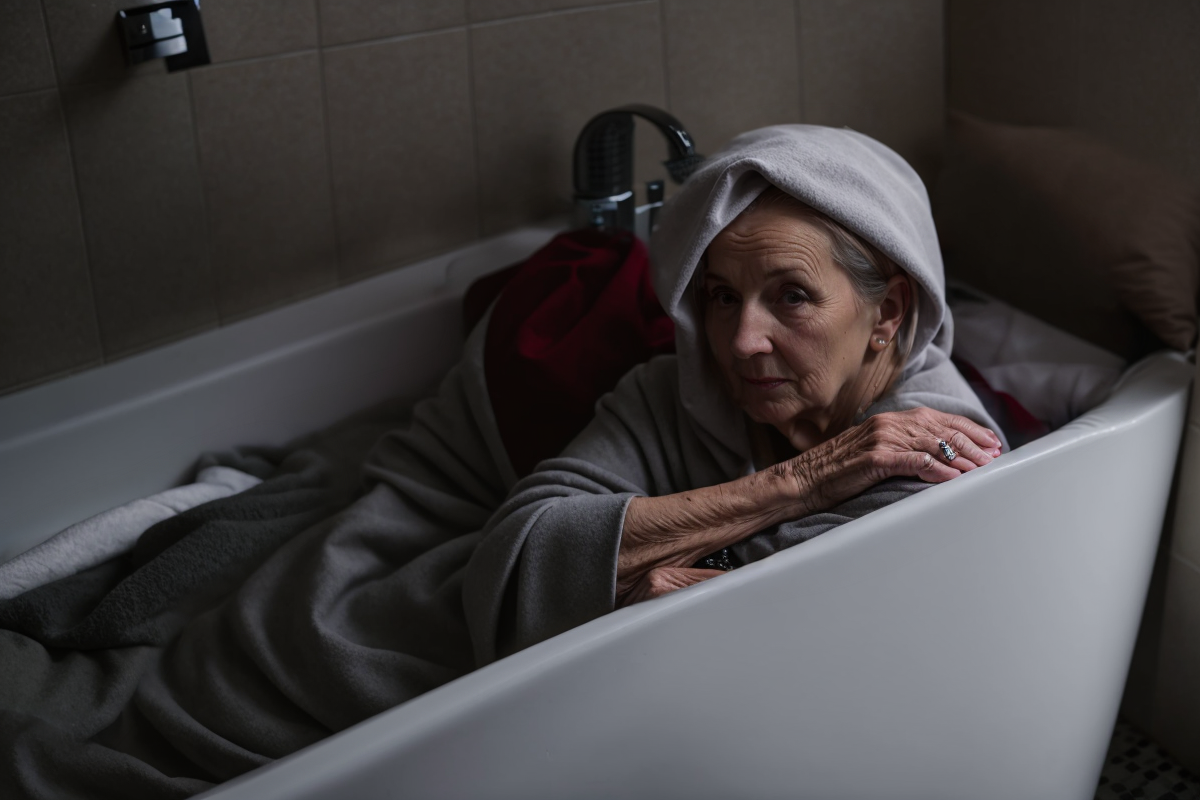
Heavy shelling in Mariupol began on March 4. Vira and her neighbor hid in the bathroom, covering themselves with pillows. Then cars started burning under her house, windows were blown out in apartments, and Vira's first floor neighbors were killed.
Sometimes Vira and her neighbor Tanya also hid in the basement of a nearby store. One day, the Russians bombarded the area where Vira lived with Grad rockets. The windows on Vira's balcony were damaged. At that moment, she and her neighbor were hiding in the bathroom. After that, they decided to go to the bomb shelter at the school nearby.
Even though the conditions there were poor, and people cooked food on bricks, Vira still felt a little safer.
"We cooked porridge and pasta. Once the bombing would end, men ran to the school nurse’s office, carrying chairs, school desks, anything they could to sit on. Mattresses were brought from the kindergarten. I took a blanket from home, and my neighbor brought some provisions and a sleeping bag. That's how she and I lived on the chairs. Volunteers brought us water and food," Vira recalls.
Vira tried not to leave the shelter, because the bombing outside was so intense that the windows shook. She spent 12 days in the school’s basement. Then her children who lived in another district of Mariupol came to get her and convinced Vira to leave the city.
"The bombings were terrible, the explosions were terrible. Cars were on fire and the houses were all turned black. Our house was all black: burned down, bombed. The windows were all blown out, the doors were blown out. The balcony was destroyed and collapsed," - Vira said about the last time she saw Mariupol.
"I left everything we had earned since 1963. Everything we had... I bought a new refrigerator for the kitchen. My husband and I worked. We bought a stove, new windows. We built a new balcony. All this has been destroyed."
Leaving Mariupol wasn't easy. A huge line of cars gathered: people were driving broken-down cars, with broken, shot-through windows. Instead of 20 minutes, Vira and her children waited for 6 hours before leaving the city. After that, the road was a little less busy. The cars began going their separate ways.
Vira remembers how the soldiers took away a man's car at a Russian checkpoint. They ordered him to step out and show his documents, then pushed him aside and took his car away. Also, during the evacuation, Vira saw husband and wife come under enemy fire: his hands and his wife's legs were blown off.
In the end, Vira and her children came to Ananyev, Odesa Oblast. Vira's brother lives in Russia. And although it was closer to go there, the family couldn't ask for help from the country which had so brutally attacked them.
"You know, I really want to go to my hometown. But people who came from there later say that the city is completely destroyed. So many people were buried... People were first buried in public squares: civilians whose houses were destroyed. And then people began to be buried in parks. Later, there was no place to bury them, so people were buried just next to their houses," Vira said.
Vira’s neighbors who left later say that they saw many crosses on the streets. In the summer, terribly unsanitary conditions emerged in Mariupol. Although the Russian occupiers have announced that the water supply will be restored, it is yet to come back. Everything is destroyed, and all the pipes are broken.
Vira's younger son, with whom she ran away from Mariupol, lives in Ukraine, and the older one lives in Russia. She loves them both equally, but because of their different attitudes to the war, they do not communicate. Vira is very hurt by this, as well as by the fact that her hometown and home have been destroyed. She doesn't understand why Russia attacked Ukraine and can't talk about the war without tears.
This material was created based on testimonies collected by the Kharkiv Human Rights Protection Group.
These pictures are created by artificial intelligence. They are NOT real. They are illustrations of the stories we tell. Most of these stories could not have been fixed by the camera. At the same time, there is documentary work by hundreds of Ukrainian and international photographers who produce real, and so much painful, documentation of this war. Check photographs by Oleksandr Glyadelov, Maksym Dondiuk, Mstyslav Chernov and Yevhen Malolietka, Andriy Dubchak, Yulia Kochetova, and many others.